 PanSpan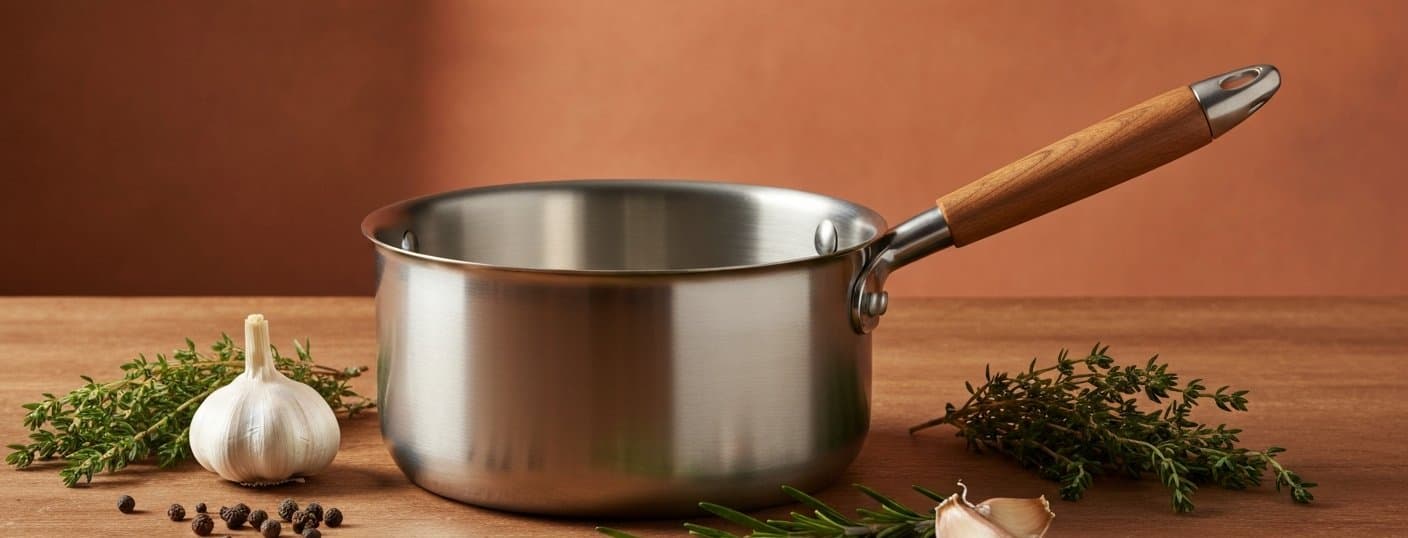
Saucepans
Saucepans are the everyday workhorse for boiling milk, simmering sauces, reheating leftovers, cooking grains, and handling small-batch soups. In this category, choices range from compact nonstick pots to stainless steel models and larger cookware sets that include saucepans alongside frying pans and stock pots.




How to choose
Start with capacity: 1 to 2 quart pans suit tea, ramen, sauces, and small sides, while larger 3.6 to 4 quart saucepans are better for family portions or batch cooking. Choose stainless steel if you want durability, rust resistance, and broad cooktop compatibility; choose nonstick if easy food release and cleanup matter more for everyday reheating or gentle cooking. Check compatibility carefully, especially for induction, because several listed stainless and nonstick options support induction but not every saucepan states it. If you already own enough cookware, a single saucepan may be more practical than a full set; if you are outfitting a kitchen, a set can cover more cooking tasks at once.
Key factors to consider
- •Capacity: small 1 to 2 quart pans are handy for sauces and reheating, while 3.6 to 4 quart options suit larger portions.
- •Material: stainless steel emphasizes durability and heat control, while ceramic or granite-style nonstick surfaces focus on release and cleanup.
- •Cooktop compatibility: confirm induction, gas, ceramic, or halogen support before buying.
- •Base construction: encapsulated, sandwich, or multi-layer bases are designed to distribute heat more evenly.
- •Lid and handle design: fitted or vented lids help with simmering, and stay-cool or riveted handles improve handling.
- •Care requirements: some products state dishwasher safety, while others recommend hand washing for easier long-term maintenance.
Common mistakes to avoid
- ✗Assuming every saucepan works on induction without checking the product details.
- ✗Buying a large cookware set when a single replacement saucepan would meet the need.
- ✗Choosing a very small pan for rice, pasta, or family portions and running out of usable capacity.
- ✗Using metal utensils on nonstick cookware unless the product specifically says the surface is metal-utensil safe.
- ✗Ignoring whether the lid is included, since lids are useful for simmering, boiling, and controlled reheating.
Frequently asked questions
What size saucepan is most useful for everyday cooking?
A 2-quart saucepan is a practical everyday size for sauces, oatmeal, ramen, reheating, and small vegetable portions. If you mostly make tea, milk, or single servings, a 1 to 1.5 litre or 1 quart pan can be enough; for larger batches, look toward 3.6 or 4 quart options.
Should I choose stainless steel or nonstick?
Choose stainless if you want a durable pan for boiling, simmering, and broad cooktop use, especially when the product has an encapsulated or multi-layer base. Choose nonstick for easier release and cleanup, particularly for sticky sauces, reheating, or lower-oil cooking, but follow the utensil and washing guidance for that specific coating.
Are these saucepans suitable for induction cooktops?
Some are induction compatible, including several stainless steel options and certain nonstick cookware sets that state induction use. Do not assume compatibility from the shape alone; confirm the product description lists induction, especially if you are comparing individual pans with larger sets.
Is a saucepan with a lid worth choosing?
A lid is useful for simmering, boiling milk, cooking grains, and reheating without losing too much moisture. Fitted glass or tempered lids also let you monitor food more easily, while vented lids can help release pressure during cooking.
When does a cookware set make more sense than one saucepan?
A set makes sense if you are starting a kitchen or replacing several pans at once, since some sets include saucepans along with frying pans, sauté pans, stock pots, or sauciers. If your main need is simply a milk pot or sauce pan, a standalone saucepan is usually the more focused choice.
Can saucepans go in the oven or dishwasher?
It depends on the model. Some listed saucepans state oven and dishwasher safety, while others recommend hand washing or only specify stovetop use, so check the care and heat-use details before relying on either feature.
Quick buying guide
If you want one everyday pan, choose a 2-quart saucepan with a lid and the right cooktop compatibility. Pick stainless steel for durability and broader heat-source use, or nonstick for easy release and simpler cleanup. For small kitchens, a 1 quart or 1.1 to 1.5 litre pan is compact and practical; for larger meals, look at 3.6 to 4 quart saucepans or a cookware set.