 PanSpan
Baking Sheets
Baking sheets cover more than cookie duty: this category includes flat insulated cookie sheets, rimmed or deep rectangular pans, toaster-oven pans, and a few broader Bakeware pieces. The main choice is format, because rimless sheets, insulated sheets, and deeper pans behave differently with cookies, pastries, vegetables, casseroles, and brownies.




How to choose
Start with size: larger 16 x 14-inch cookie sheets suit bigger batches, while 9 x 13-inch pans and compact toaster-oven sets fit smaller ovens or deeper bakes. Choose insulated aluminum or air-layer designs if your priority is reducing over-browned cookie bottoms; choose heavy carbon steel or reinforced aluminum when you want sturdier everyday bakeware. Nonstick coatings can help with release and cleanup, but check the care notes because some pans recommend hand washing or non-metal utensils. If you bake cakes or brownies more often than cookies, a deeper rectangular pan may overlap with Cake Pans better than a flat cookie sheet.
Key factors to consider
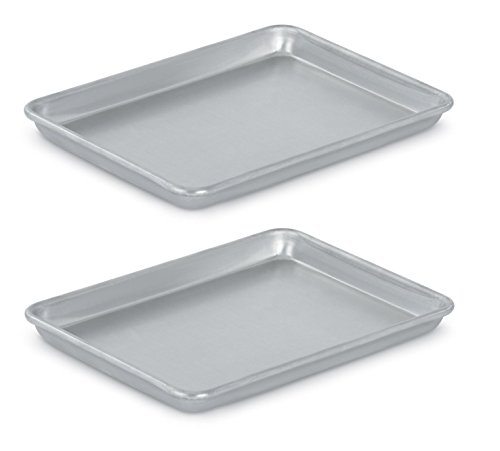
- •Pan shape: rimless cookie sheets are easier for sliding cookies off, while rimmed or deep pans contain juices, batter, and casseroles.
- •Material: natural aluminum emphasizes heat dispersion, while carbon steel is commonly used for durable nonstick pans.
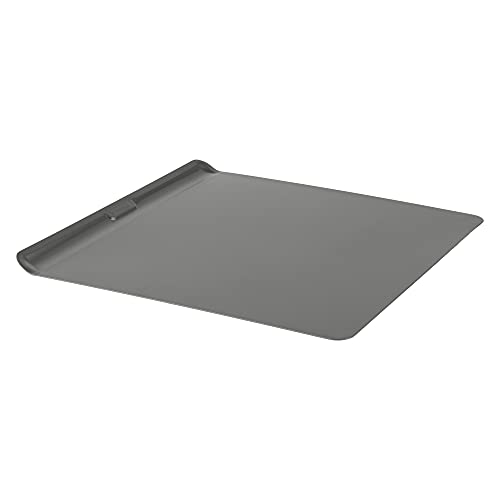
- •Insulated construction: air-layer cookie sheets are designed to reduce scorching and over-browning on the bottom.
- •Surface texture: embossed grids, diamond textures, and textured bottoms are used to improve airflow, release, or browning.
- •Oven fit: confirm the listed dimensions work in your oven or toaster oven before choosing a large sheet.
- •Care requirements: note whether the pan is hand-wash recommended, dishwasher-safe, or should be used with silicone, wood, or nylon utensils.
Common mistakes to avoid
- ✗Buying a rimless cookie sheet when you need a pan that can hold roasting juices or casserole ingredients.
- ✗Assuming every nonstick pan has the same coating, temperature limit, or utensil compatibility.
- ✗Choosing a large sheet without measuring the usable space inside the oven.
- ✗Overlooking insulated cookie sheets when repeated cookie bottom browning is the main problem.
- ✗Treating cake pans, tart pans, roasters, and cookie sheets as interchangeable even though their depths and release needs differ.
Frequently asked questions
What is the difference between a cookie sheet and a baking pan?
A cookie sheet is often flat or rimless so baked goods can slide off easily, while a baking pan may have raised sides for batter, brownies, casseroles, or roasting. In this catalog, both styles appear, so match the pan depth to the food you make most.
Are insulated baking sheets worth considering?
An insulated sheet uses an air layer between metal surfaces to help moderate heat on the bottom of cookies. That can be useful if your cookies or pastries tend to brown too quickly underneath, though it is still important to follow recipe timing and oven placement.
Is aluminum or carbon steel better for baking sheets?
Natural aluminum pans in this catalog emphasize heat dispersion and even baking, while carbon-steel pans are commonly paired with nonstick coatings and heavy-duty construction. The better choice depends on whether you value bare-metal heat performance or easier food release.
Do I need a nonstick baking sheet?
A nonstick surface can make cookies, brownies, cakes, and casseroles easier to release and can simplify cleanup. However, many coated pans call for gentler utensils or specific washing methods, so check the product care details before buying.
Can one baking sheet handle cookies, vegetables, and sheet-pan dinners?
A rimmed pan is usually more practical for vegetables and sheet-pan dinners because it can contain oil and juices, while a flat cookie sheet is better suited to cookies and pastries. If you bake both often, consider having one cookie-focused sheet and one deeper rectangular pan.
What size should I choose?
Choose dimensions based on your oven and batch size. Larger 16 x 14-inch sheets suit bigger cookie batches, 9 x 13-inch pans are versatile for deeper bakes, and toaster-oven sets are made for compact appliances.
Quick buying guide
If you mostly bake cookies, choose a flat or insulated cookie sheet, especially if bottom browning is a concern. If you want one pan for brownies, lasagna, casseroles, or roasting, pick a deeper rectangular pan instead. For compact appliances, use a toaster-oven set sized for that space. Buyers who already own general Bakeware may only need to add the shape they are missing.